

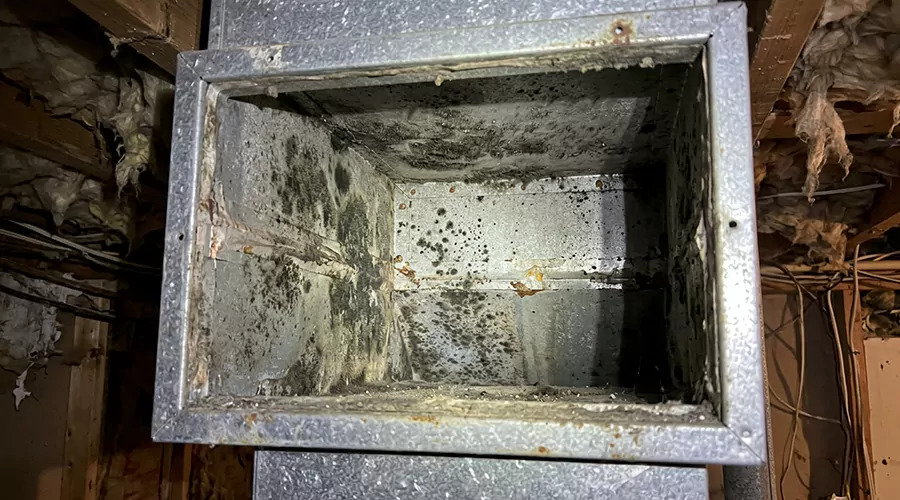
Mold in HVAC ducts develops when moisture remains on duct surfaces long enough for fungal growth to establish. Condensation and water leaks are common sources of this moisture. Poor drainage around cooling equipment can also create damp conditions. Mold may begin developing on wet materials within 24 to 48 hours when environmental conditions are suitable.
An HVAC system circulates heated or cooled air throughout a building. During normal operation, dust and other airborne particles can collect on internal components. These deposits may provide nutrients for mold when water becomes available. However, dust alone does not cause fungal growth because mold requires sufficient moisture.
Understanding how mold develops inside the system helps identify which components need attention. A problem originating near the cooling coil may require a different solution from contamination caused by a roof leak. Removing visible growth without addressing the source of moisture allows the same problem to return.
What Are the Main Causes of Mold in HVAC Ducts?
Mold develops in HVAC ductwork when moisture reaches surfaces containing suitable nutrients. The water may come from cooling equipment or damaged building materials. High humidity can also contribute to condensation on cold surfaces. Identifying the actual moisture source is necessary before deciding how contamination should be addressed.
Condensation Around Cooling Components
Air conditioning systems remove heat from indoor air by passing it over a cold evaporator coil. When humid air contacts the coil, some of its moisture condenses into water. The water should collect in a drain pan and leave through the condensate drainage system. Problems arise when moisture reaches nearby insulation or remains on surfaces that are not designed to stay wet.
Repeated condensation can affect ducts connected to the cooling equipment when insulation or air sealing is inadequate. Cold supply ducts passing through humid spaces may also develop moisture on their exterior surfaces. If water enters through damaged connections or reaches porous materials, conditions can develop that support mold growth. Proper insulation and drainage help prevent these situations.
Clogged Condensate Drain Lines
The condensate drain line removes water produced during air conditioning operation. When the line becomes obstructed, water may accumulate in the drain pan or overflow into nearby areas. The resulting dampness can affect insulation and other materials surrounding the air handler. Our air handler unit cleaning service addresses this component during routine maintenance.
A blocked drain does not automatically cause mold throughout the duct system. However, water that remains trapped near accumulated dust or porous insulation creates an opportunity for growth. Inspecting accessible drainage components helps identify water problems before surrounding materials become extensively damaged.
High Indoor Humidity
High indoor humidity makes condensation more likely when humid air contacts cold HVAC surfaces. Moisture from showers or poorly ventilated indoor activities can increase the amount of water vapor in the home. During cooling operation, surfaces that reach the dew point may develop water droplets.
The Environmental Protection Agency recommends maintaining indoor relative humidity ideally between 30% and 50% when practical. A digital hygrometer can help homeowners monitor changing conditions throughout the day. Persistent humidity above the recommended range deserves attention when condensation is already visible around HVAC components.
Damaged Duct Insulation
Insulation protects duct surfaces from unwanted temperature changes and helps limit condensation in unconditioned spaces. When insulation becomes torn or displaced, cold duct surfaces may contact warm humid air. Water can then collect on the exposed material and affect nearby insulation.
Ductwork installed in attics or crawlspaces is particularly vulnerable when insulation is inadequate. The temperature difference between cooled air and the surrounding environment may be substantial. Repeated condensation can damage porous materials and support mold growth when those materials remain damp.
Leaking Duct Connections
Air leaks occur when duct joints become separated or damaged. Return-side leaks may draw humid air from attics or crawlspaces into the system. Supply-side leaks can also expose cold duct surfaces to surrounding air under certain conditions.
Air leakage does not automatically mean mold is present. However, unwanted air movement can contribute to moisture problems and introduce particles that settle on internal components. Correcting damaged joints helps reduce conditions that may contribute to contamination.
Water Leaks Around the Building
Roof leaks and plumbing problems can introduce water into areas containing HVAC ductwork. Moisture may travel through ceiling cavities before reaching the duct insulation or entering an opening. The affected materials can remain wet even after the visible leak has stopped.
Building water damage may be especially difficult to identify when ducts are concealed behind walls or above finished ceilings. A stain around one register can sometimes be the first visible sign of a larger moisture problem. The original leak must be corrected before damaged duct materials can be restored.
Poorly Maintained HVAC Humidifiers
Some heating systems use whole-house humidifiers that introduce controlled moisture into the airflow. When these devices operate correctly, they should not allow liquid water to collect inside the ductwork. Problems develop when water supply connections leak or drainage components malfunction.
A humidifier that adds excessive moisture may also contribute to condensation elsewhere in the system. This becomes more likely during cold weather when building surfaces can remain much colder than indoor air. Following the equipment manufacturer's maintenance instructions helps limit unwanted moisture exposure.
Which HVAC Components Are Most Vulnerable to Mold?
Mold can develop in several HVAC components when moisture remains present. Areas near cooling equipment deserve attention because air conditioning naturally produces condensate. However, contamination can also affect return ducts or insulation exposed to building leaks. The affected location often provides clues about where the water originated.
| HVAC Component | Possible Moisture Source | Potential Problem |
|---|---|---|
| Evaporator coil area | Cooling condensation | Damp deposits near the coil |
| Condensate drain pan | Standing water from poor drainage | Persistent moisture near HVAC equipment |
| Supply air ducts | Condensation on cold surfaces | Growth on damp dust deposits |
| Return air ducts | Humid air entering through damaged connections | Moisture-related contamination |
| Internal duct insulation | Condensation or water leaks | Growth within porous material |
| Air handler cabinet | Drainage problems or water intrusion | Damp internal components |
| Whole-house humidifier | Leaking water supply or poor drainage | Moisture entering nearby duct sections |
The location of contamination matters because different HVAC materials require different treatment methods. Bare sheet metal can sometimes be cleaned when growth is confirmed and the moisture source is corrected. Wet or moldy fiberglass insulation generally cannot be restored through ordinary cleaning.
A contaminated component does not automatically mean every duct contains mold. The affected areas should be identified before deciding whether localized work or broader remediation is necessary.
What Are the Warning Signs of Mold in HVAC Ducts?
Suspected mold inside HVAC ducts may become noticeable through visible deposits or recurring moisture problems. A musty odor during system operation can also suggest damp conditions. However, these signs cannot confirm mold by themselves because ordinary dust and other contaminants may produce similar symptoms.
Common warning signs include:
- Irregular dark patches appear on accessible internal duct surfaces.
- A persistent musty odor occurs while the HVAC system operates.
- Water droplets repeatedly develop around supply grilles.
- Dark deposits return after accessible surfaces are cleaned.
- Insulation around exposed ductwork appears wet or damaged.
- Standing water accumulates near the condensate drain pan.
- A recent roof or plumbing leak affected an area containing ducts.
- Visible contamination appears near the air handler or cooling coil.
- Water stains develop around ceiling registers.
- Suspected growth appears on nearby moisture-damaged building materials.
A dark deposit on a vent cover is not reliable evidence of internal fungal growth. Airborne dust can collect along airflow paths and form stains that look similar to mold. The moisture history and condition of surrounding materials provide more useful information.
If contamination inside the HVAC system is credibly suspected, avoid disturbing the deposits or operating the affected equipment until the condition has been assessed. Moving air through contaminated components can distribute particles into occupied rooms.
How Quickly Can Mold Develop Inside HVAC Ductwork?
Mold may begin developing within 24 to 48 hours when materials remain damp under suitable conditions. However, visible growth does not follow the same timeline in every HVAC system. The amount of moisture and the affected material determine how quickly contamination develops.
A smooth metal surface may dry relatively quickly after limited moisture exposure. Fiberglass insulation can retain water within its structure and remain damp for longer periods. This difference makes the type of duct material particularly important when evaluating water damage.
| Moisture Condition | Possible Development | Recommended Action |
|---|---|---|
| Brief condensation | Temporary dampness | Identify why moisture formed |
| Dampness lasting 24 to 48 hours | Mold growth becomes possible | Dry or remove affected materials |
| Repeated condensation | Continuing moisture exposure | Investigate insulation and humidity |
| Wet internal fiberglass insulation | Contamination may develop within porous material | Evaluate replacement |
| Unresolved water intrusion | Growth may recur after cleaning | Correct the original leak |
These conditions do not represent a guaranteed sequence of deterioration. Some materials may dry completely before mold develops, while others remain damp in concealed locations. The most effective way to limit damage is to remove unwanted moisture promptly.
Can Mold in HVAC Ducts Affect Indoor Air Quality?
Mold growing inside an HVAC system can contribute to indoor exposure when contaminated particles enter the airflow. The amount released depends on the location and condition of the growth. Not every deposit inside ductwork becomes airborne, but confirmed contamination should be addressed because the system moves air throughout occupied rooms.
Exposure to indoor mold can cause allergic reactions or respiratory symptoms in some individuals. People with asthma or mold allergies may be particularly sensitive to damp environments. However, symptoms alone cannot establish that the HVAC system is the source because mold can also grow elsewhere in a building.
The presence of visible mold does not automatically determine the severity of exposure. The affected area and whether contaminated material is being disturbed both influence the situation. Identifying the source of moisture and removing established growth are more useful than attempting to eliminate every naturally occurring mold spore from indoor air.
How Can You Check HVAC Ducts for Moisture Problems?
Homeowners can perform a limited visual inspection to identify conditions that may support mold growth. The inspection should focus on accessible surfaces and moisture evidence rather than opening concealed ductwork. A flashlight and digital hygrometer are useful for gathering information without disturbing suspected contamination.
Begin by checking whether water stains or condensation appear near visible duct connections. Record the indoor humidity and note whether the problem changes during cooling operation. If the condensate drainage area is safely accessible without removing equipment panels, look for signs of standing water.
Follow these inspection steps:
- Measure indoor humidity: Use a hygrometer to identify persistently elevated moisture levels.
- Inspect accessible grilles: Look for water staining or unusual deposits without scraping the surface.
- Check nearby walls and ceilings: Record signs of leaks or dampness around HVAC openings.
- Observe exposed ductwork: Look for damaged insulation or visible condensation.
- Check accessible drainage areas: Note standing water or signs of overflow near the air handler.
- Document the findings: Photograph affected locations and record when symptoms appear.
This inspection can help identify moisture conditions, but it cannot confirm the presence of mold throughout hidden duct sections. Do not cut into ducts or remove insulation to search for contamination. When growth is suspected inside the HVAC system, further evaluation should avoid spreading material through the building.
Does the Type of HVAC Duct Affect Mold Growth?
Different duct materials respond differently to water exposure and contamination. Mold can grow on damp deposits covering metal, but porous fiberglass materials can retain moisture inside their fibers. The ability to clean or restore the affected material depends on its construction and condition.
| Duct Material | Main Moisture Concern | Typical Response to Confirmed Mold |
|---|---|---|
| Bare sheet metal | Surface deposits remain damp | Physical cleaning may be possible |
| Internally insulated metal | Moisture penetrates the liner | Replace affected insulation |
| Fiberglass duct board | Water remains inside porous material | Replace moldy sections |
| Flexible insulated duct | Contamination affects liner or insulation | Replace affected material when necessary |
| Mixed duct system | Different materials are affected | Evaluate each section separately |
A metal duct with a small area of confirmed surface growth may be suitable for cleaning after the moisture problem is corrected. However, contaminated fiberglass duct board generally requires replacement because growth can develop within the material.
Using the same cleaning method throughout a mixed duct system can damage sensitive components. Identifying the affected material is therefore an important part of deciding how contamination should be handled.
How Much Can Mold in HVAC Ducts Cost to Fix in 2026?
The cost of addressing mold in HVAC ducts depends on the extent of contamination and which materials require treatment or replacement. Localized growth inside an accessible duct represents a different project from contamination involving the air handler and multiple insulated branches. The moisture source may also require separate repairs.
Published U.S. cost estimates for 2026 provide the following broad benchmarks.
| Condition | Typical Work | Estimated 2026 Cost |
|---|---|---|
| Ordinary duct dust without confirmed mold | Standard air duct cleaning when justified | $271 to $509 |
| Confirmed mold in ductwork | Duct mold remediation | $600 to $2,000 |
| Mold affecting multiple HVAC components | Extensive HVAC remediation | $3,000 to $10,000 |
| Wet or moldy internal insulation | Replace affected material | Requires a section-specific estimate |
These figures describe different project scopes and should not be combined automatically. The number of vents alone does not determine the cost because contamination may be localized near one component or extend through several areas.
Identifying water problems early can reduce the likelihood of expensive material replacement. A small drainage issue may become more costly if surrounding insulation remains wet for an extended period.
When Should You Call an HVAC Professional?
Professional assessment is appropriate when substantial suspected mold appears inside HVAC ducts or around internal equipment components. Persistent moisture and contaminated insulation also require evaluation because ordinary household cleaning cannot reliably restore these materials. The assessment should identify the affected areas and determine where the water originated.
A qualified HVAC technician can inspect condensate drainage and evaluate damaged duct connections. When contamination involves porous materials or extends across multiple components, a mold remediation specialist may be needed. The method should match the duct material and prevent unnecessary release of contaminated particles.
Cleaning may be possible on sound metal surfaces after correcting the moisture source. However, wet or moldy internal fiberglass insulation generally requires replacement. Chemical fogging should not be treated as a substitute for removing material that cannot be cleaned effectively.
How Can You Prevent Mold From Developing in HVAC Ducts?
Preventing mold in HVAC systems depends primarily on controlling moisture. Proper condensate drainage helps remove water produced during cooling, while suitable duct insulation reduces unwanted condensation. Regular filtration and equipment maintenance also help reduce deposited particles that can support growth when surfaces become wet.
Maintain Condensate Drainage
Check accessible condensate drainage areas during seasonal HVAC maintenance and watch for standing water or overflow. The drain system should remove moisture produced by the cooling coil. Repeated drainage problems need correction before water affects nearby insulation or other building materials.
Control Indoor Humidity
Monitor indoor relative humidity with a hygrometer and aim for approximately 30% to 50% when practical. Use bathroom exhaust ventilation during showers and manage other moisture-producing activities. Persistent humidity problems should be investigated because they can increase condensation on cold HVAC surfaces.
Keep Duct Insulation in Good Condition
Inspect exposed ductwork for damaged insulation or disconnected joints. Ducts running through unconditioned spaces need suitable insulation to limit condensation. Repairing damaged sections helps prevent unwanted air from contacting surfaces that become cold during cooling operation.
Maintain HVAC Filters
Inspect the HVAC filter approximately once a month during heavy system use and replace it according to the manufacturer's instructions. Make sure the filter fits securely because gaps allow air to bypass the material. Filtration helps reduce dust accumulation, but moisture control remains necessary to prevent mold growth.
Conclusion
Mold in HVAC ducts develops when moisture remains on surfaces that can support fungal growth. Condensation and drainage problems are common sources, while damaged insulation can make contamination harder to correct. Identifying the affected material and moisture source determines the appropriate response. Significant internal growth may require professional assessment. This week, check indoor humidity and inspect accessible HVAC drainage areas for signs of unwanted moisture.